Cost of Living in India (2026): Realistic Monthly Budgets by City, Lifestyle & Salary
The average cost of living in India in 2026 ranges from ₹28,000 to ₹65,000 ($320–$740) per month for a single person including rent, and ₹95,000 to ₹2,20,000 ($1,080–$2,500) for a family of four. While everyday expenses in India are roughly 70–75% lower than in the US, UK, or Western Europe, your real monthly spend depends heavily on where you live—whether in a high-cost metro like Mumbai or Bengaluru, a fast-growing Tier-2 hub like Pune or Jaipur, or a smaller town. [1, 2]
If you are planning a move, budgeting for a new job offer, or relocating back to India, national averages only tell half the story. Below is a complete 2026 breakdown of real monthly budgets by household type, Tier-1 vs. Tier-2 city comparisons, hidden Indian move-in costs (like 10-month security deposits and society maintenance), and the exact salary you need to live comfortably.
Quick Summary: Monthly Cost of Living in India (2026)
| Household & Lifestyle | Tier-2 City (Pune, Jaipur, Kochi) | Tier-1 Metro (Bengaluru, Delhi, Hyderabad) | Mumbai (Prime Areas) |
| Single (Budget / Student / Shared Flat) | ₹18,000 – ₹28,000 ($205–$320) | ₹28,000 – ₹45,000 ($320–$510) | ₹40,000 – ₹60,000 ($455–$680) |
| Single (Comfortable / 1BHK Solo) | ₹35,000 – ₹55,000 ($400–$625) | ₹55,000 – ₹90,000 ($625–$1,020) | ₹85,000 – ₹1,40,000 ($965–$1,590) |
| Couple (Mid-Range / 2BHK) | ₹55,000 – ₹85,000 ($625–$965) | ₹85,000 – ₹1,45,000 ($965–$1,650) | ₹1,30,000 – ₹2,10,000 ($1,475–$2,385) |
| Family of 4 (Comfortable + Schooling) | ₹95,000 – ₹1,50,000 ($1,080–$1,705) | ₹1,50,000 – ₹2,60,000 ($1,705–$2,955) | ₹2,20,000 – ₹4,00,000+ ($2,500–$4,545+) |
Note: USD conversions are calculated at ~₹88 = $1 USD. Excluding rent, baseline monthly living expenses average ₹27,500–₹28,400 ($310) for one person and ₹98,000–₹1,02,000 ($1,120) for a family of four. [1]
- City-by-City Comparison: Tier-1 Metros vs. Tier-2 Hubs
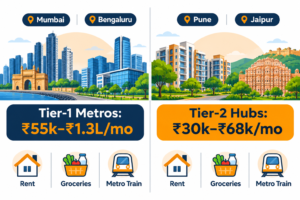
Where you choose to live is the single biggest factor in your Indian budget. Moving from Mumbai to a Tier-2 lifestyle or tech hub can reduce your housing expenses by 50% to 70% while still giving you fiber broadband, modern gated apartments, and reliable healthcare. [1]
| City | City Tier | 1BHK Rent (City Centre) | 3BHK Rent (Good Locality) | Monthly Groceries (1 Person) | Total Monthly Budget (Single) | Best Suited For |
| Mumbai | Tier-1 | ₹38,000 – ₹90,000 | ₹1,10,000 – ₹2,50,000+ | ₹8,000 – ₹14,000 | ₹75,000 – ₹1,30,000 | Finance, media, corporate HQs |
| Bengaluru | Tier-1 | ₹20,000 – ₹45,000 | ₹45,000 – ₹1,10,000 | ₹7,500 – ₹12,500 | ₹55,000 – ₹95,000 | Tech workers, founders, expats |
| Delhi NCR (Gurugram/Noida) | Tier-1 | ₹18,000 – ₹40,000 | ₹38,000 – ₹95,000 | ₹7,000 – ₹12,000 | ₹50,000 – ₹88,000 | MNCs, consulting, government |
| Hyderabad | Tier-1 | ₹15,000 – ₹30,000 | ₹32,000 – ₹70,000 | ₹6,500 – ₹11,000 | ₹45,000 – ₹75,000 | High tech pay + lower rent |
| Pune | Tier-2 | ₹14,000 – ₹26,000 | ₹28,000 – ₹60,000 | ₹6,000 – ₹10,000 | ₹40,000 – ₹68,000 | Students, IT, mild climate |
| Chennai | Tier-1 | ₹14,000 – ₹28,000 | ₹30,000 – ₹65,000 | ₹6,500 – ₹10,500 | ₹42,000 – ₹70,000 | SaaS, manufacturing, families |
| Kolkata | Tier-1 | ₹11,000 – ₹22,000 | ₹24,000 – ₹50,000 | ₹5,500 – ₹9,500 | ₹35,000 – ₹58,000 | Lowest metro cost of living |
| Jaipur / Kochi / Chandigarh | Tier-2 | ₹9,000 – ₹18,000 | ₹18,000 – ₹40,000 | ₹5,000 – ₹8,500 | ₹30,000 – ₹50,000 | Remote workers, retirees, NRIs |
- Detailed Expense Breakdown by Category (2026 Prices)

Housing & Rent (How the BHK System Works)
Indian residential listings use the BHK format—short for Bedroom, Hall (living room), and Kitchen. [1]
- 1BHK Apartment: Averages ₹14,000/month in city centres and ₹9,000/month in suburbs nationwide, though modern 1BHKs in prime Bengaluru, Gurugram, or Mumbai neighborhoods run ₹25,000–₹65,000/month.
- 3BHK Apartment: Averages ₹32,000/month across India, and ₹55,000–₹1,50,000+/month in gated metro societies with pools, gyms, and 24/7 power backup.
- PG (Paying Guest) & Co-Living: ₹8,000–₹18,000/month per bed/room. This usually includes Wi-Fi, housekeeping, electricity, and daily meals, making it the most economical choice for students and solo newcomers.
Utilities, Fiber Internet & Mobile Data
India offers some of the lowest telecom and broadband rates globally, though summer cooling costs require careful budgeting. [1, 2]
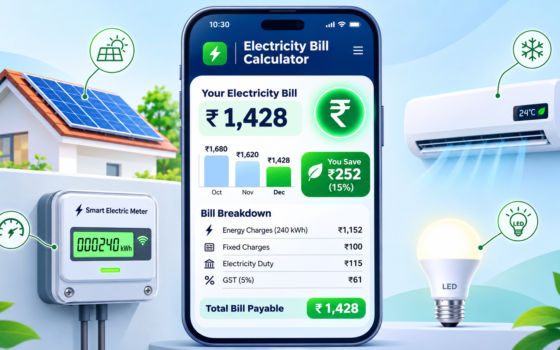
- Electricity, Water & Garbage (900 sq. ft / 85 sq. m flat): ₹3,500–₹4,500/month on average. Seasonal tip: Running 2–3 air conditioners during peak summer (April–July) in Delhi, Jaipur, or Hyderabad can push monthly electricity bills to ₹8,000–₹14,000.
- Cooking Gas (LPG Cylinder or Piped PNG): ₹850–₹1,050 per cylinder (lasts a two-person household roughly 6–8 weeks).
- Fiber Broadband (100–300 Mbps Unlimited): ₹700–₹1,200/month via providers like JioFiber, Airtel Xstream, or ACT Fibernet.
- 5G Mobile Plan (Unlimited Calls + 1.5GB–2GB/day): ₹300–₹400/month. [1, 2, 3, 4]
Food, Groceries & Dining Out
Shopping for local produce, lentils, rice, and dairy keeps food costs remarkably low. However, imported Western foods, cheeses, chocolates, and wines face steep customs duties and often cost 2x to 4x more than in Europe or North America. [1]
- Monthly Grocery Budget: ₹5,500–₹10,000 for a single person; ₹18,000–₹32,000 for a family of four. [1]
- Everyday Grocery Staples:
- Milk (1 liter): ₹62
- Eggs (12 large): ₹88
- White Rice (1 kg): ₹62
- Chicken Fillets (1 kg): ₹275
- Apples (1 kg): ₹185
- Tomatoes / Onions / Potatoes (1 kg): ₹33–₹47
- Eating Out & Coffee:
- Local / casual restaurant meal: ₹150–₹250 ($1.70–$2.85)
- Mid-range 3-course meal for two: ₹1,000–₹1,800 ($11–$20)
- Specialty cafe cappuccino: ₹165–₹220 [1]
Transportation & Commuting
- Metro & Bus Monthly Pass: ₹780–₹1,500/month (single metro rides in Delhi, Bengaluru, Mumbai, and Hyderabad cost ₹10–₹60).
- Ride-Hailing (Uber, Ola, Rapido): ₹50–₹150 for short auto-rickshaw hops; ₹250–₹600 for cross-city cab trips.
- Petrol Price: ₹102–₹107 per liter.
- Should You Buy a Car? New compact cars cost ₹7–₹12 lakh and mid-size sedans run ₹15–₹20 lakh+ due to vehicle taxes. For most city residents, combining metro travel with daily Uber/Ola rides is significantly cheaper than car EMIs, fuel, insurance, and parking. [1, 2, 3, 4, 5]
Healthcare & Medical Insurance
India’s private hospitals deliver internationally accredited care at a fraction of Western prices, though foreign residents cannot access free public healthcare and must pay out of pocket or carry insurance. [1]
- Private General Physician Visit: ₹500–₹1,000 ($6–$11).
- Specialist Consultation: ₹1,000–₹2,500 ($11–$28).
- Private Health Insurance (₹10 Lakh / ~$11,300 cover): ₹8,000–₹18,000/year for an individual; ₹22,000–₹45,000/year for a family of four. [1, 2]
Education & Childcare
- Preschool / Daycare: ₹5,500–₹15,000/month.
- Private Indian Curriculum Schools (CBSE/ICSE): ₹60,000–₹2,00,000/year.
- International Schools (IB/IGCSE in Metros): ₹3,00,000–₹12,00,000+/year—often the single biggest expense for relocating families. [1, 2]
- Five Hidden Costs of Living in India Nobody Warns You About
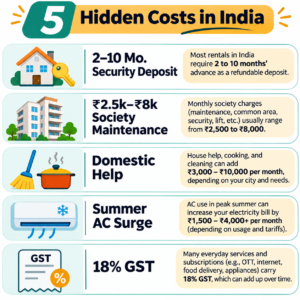
Standard cost-of-living calculators miss several uniquely Indian expenses that directly impact your upfront cash flow and monthly budget:
- High Rental Security Deposits (2 to 10 Months’ Rent): While Delhi NCR and Hyderabad usually ask for 2 months’ rent as a refundable deposit, landlords in Bengaluru and Mumbai routinely require 5 to 10 months’ rent upfront. [1]
- Monthly Society Maintenance Fees: In gated apartment complexes, tenants typically pay an additional ₹2,500–₹8,000/month on top of base rent to cover 24/7 security, diesel generator power backup, elevators, and clubhouse upkeep.
- Real Estate Brokerage Fees: Unless you rent directly from owners on platforms like NoBroker or MyGate, property brokers charge 15 to 30 days’ rent (plus 18% GST) as a one-time fee. [1]
- Domestic Help & Household Staffing: Hiring part-time help is a standard part of urban Indian life and very affordable:
- Daily sweeping, mopping & dishwashing maid: ₹2,500–₹5,000/month
- Part-time home cook (2 meals/day): ₹5,000–₹10,000/month
- Full-time personal driver: ₹18,000–₹28,000/month [1]
- GST & Quick-Commerce Convenience Fees: Restaurant bills, salon services, gym memberships, and telecom plans carry 5% to 18% GST, while instant-delivery apps (Blinkit, Zepto, Swiggy Instamart) add small platform and surge fees on frequent orders.
- How Much Salary Do You Need to Live Comfortably in India?
While global databases list India’s average net salary at ₹36,000–₹42,000/month, that figure reflects the wider national workforce rather than an urban professional lifestyle. Here is the post-tax monthly income you actually need in 2026:
- ₹45,000 – ₹60,000/month: Comfortable for a single person living in a Tier-2 city (Pune, Jaipur, Kochi) or sharing a 2BHK/3BHK flat in a Tier-1 metro.
- ₹85,000 – ₹1,25,000/month: Comfortable solo 1BHK lifestyle in Bengaluru, Hyderabad, or Delhi NCR—covering rent, dining out, fitness, domestic help, and monthly savings.
- ₹1,60,000 – ₹2,50,000+/month: Comfortable lifestyle for a family of four in a Tier-1 metro, including a gated 3BHK apartment, private schooling, cabs/car upkeep, health insurance, and investments.
- Remote Workers Earning in USD/EUR/GBP ($2,000+/month): Earning ~₹1.75 lakh+ per month in foreign currency places you in the top urban income tier, allowing for a luxury apartment, full-time household help, and high monthly savings.
- Practical Ways to Cut Your Living Costs in India by 25%
- Set Up UPI on Day One: India’s economy runs on the Unified Payments Interface (UPI) via apps like Google Pay, PhonePe, and Paytm. Paying from a local Indian bank account (or an NRE/NRO account for NRIs) eliminates the 2%–3.5% foreign transaction fees charged on international cards.
- Balance Local Mandis with Instant Delivery: Buying fruits, vegetables, and staples from neighborhood mandis or D-Mart/Reliance Smart is typically 30–40% cheaper than ordering everything through 10-minute delivery apps.
- Choose Semi-Furnished Flats Over Fully Furnished: Fully furnished apartments carry a 25–40% rent markup. Renting a semi-furnished flat and leasing appliances/furniture (via Furlenco or RentoMojo) saves significant money on 1- to 2-year stays.
- Prioritize Metro Connectivity: Living within 1 km of a metro station in Delhi NCR, Bengaluru, Mumbai, or Hyderabad cuts daily commute costs by up to 70% compared to relying on surge-priced cabs. [1, 2]
Frequently Asked Questions (FAQs)
Is $1,000 a month enough to live in India?
Yes. $1,000/month (~₹88,000) is enough for a single person to live comfortably in almost every Indian city, covering a modern 1BHK apartment, utilities, groceries, dining out, gym membership, and part-time domestic help. In Mumbai, $1,000 covers a modest-to-comfortable solo budget; in Tier-2 cities like Pune or Jaipur, it supports an upscale lifestyle.
Which is the cheapest major city to live in India?
Among Tier-1 metros, Kolkata has the lowest overall living and rental costs, followed by Chennai and Hyderabad (which offers the strongest tech-salary-to-rent ratio). Among major Tier-2 cities, Jaipur, Coimbatore, Indore, and Kochi offer the best combination of affordability and modern infrastructure. [1]
How much does a family of four need per month in India?
Excluding rent, a family of four spends roughly ₹98,000–₹1,02,000/month on average. Including a 3BHK apartment, utilities, groceries, healthcare, and schooling, a realistic total budget is ₹1,10,000–₹1,50,000/month in Tier-2 cities and ₹1,70,000–₹2,80,000/month in Tier-1 metros. [1]
Can foreigners open a bank account and use UPI in India?
Yes. Foreign nationals on valid employment, business, or student visas (staying 180+ days) can open a resident Indian bank account using their passport, visa, FRRO registration, and local address proof. Short-term tourists and business travelers can also link international cards to UPI One World wallets at major international airports to scan and pay via QR codes nationwide.