Why Is the Indian Rupee Falling Against the US Dollar?

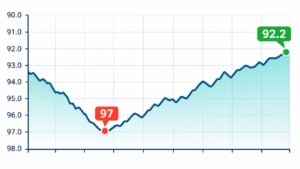
If you have tracked the USD/INR exchange rate in 2026, you have seen one of the sharpest currency swings in recent memory. After sliding toward historic lows near ₹97 per US dollar earlier in the year, the Indian rupee staged a dramatic late-2026 comeback—rebounding toward the ₹92–₹93 range by November following aggressive Reserve Bank of India (RBI) intervention and a surge in foreign equity inflows.
Despite that recovery, the broader question remains top of mind for investors, students, NRIs, and everyday consumers: why does the Indian rupee keep falling against the US dollar over time?
Quick Summary: Why the Rupee Weakens
- High Crude Oil Import Bills: India imports over 70% of its crude oil in US dollars, creating constant dollar demand.
- Foreign Capital Swings (FPI & FDI): When global investors pull money out of Indian markets, they sell rupees and buy dollars.
- Widening Trade Deficit: Heavy imports of oil, gold, and electronics routinely outpace Indian exports.
- Strong US Dollar & Fed Policy: High US bond yields and global geopolitical conflicts push investors toward the safe-haven dollar.
USD vs. INR in 2026: What Is Happening Right Now?
To understand currency headlines, it helps to look at the exchange rate as a simple supply-and-demand equation. When global demand for the US dollar rises faster than demand for the rupee, you need more rupees to buy $1—meaning the rupee weakens.
In 2026, the rupee experienced a classic two-part cycle:
- The Slide (May – October 2026): Escalating Middle East tensions pushed Brent crude oil prices higher, while foreign investors pulled billions out of emerging markets. As a result, the rupee dropped more than 7% on the year, testing levels near ₹97 per dollar.
- The Turnaround (October – November 2026): Following emergency anti-speculation rules by the RBI and a sudden global investor rotation out of US AI stocks into Indian equities—bringing in a record $15 billion in November FPI inflows—the rupee clawed back significant ground to trade around ₹92.20–₹93 per dollar.
Key Distinction: Depreciation vs. Devaluation
- Depreciation happens naturally in a floating market due to supply and demand (this is what happens to the INR today).
- Devaluation is an intentional, official reduction in a currency’s value by a government or central bank under a fixed exchange rate system.
6 Key Reasons Why the Indian Rupee Falls Against the Dollar

- Global Crude Oil Prices and India’s Import Bill
India is one of the world’s largest importers of crude oil, sourcing more than 70% of its energy needs from abroad. Because global oil is priced and settled in US dollars, any spike in crude prices—such as the surges above $115 per barrel triggered by Middle East conflicts in 2026—forces Indian importers to buy massive amounts of USD. This surge in dollar demand directly pushes the rupee lower.
- Foreign Portfolio Investor (FPI) Outflows
Foreign institutional investors play a major role in Indian stock and bond markets. When global uncertainty rises or US interest rates remain elevated, FPIs often pull capital out of emerging markets to lock in safer returns in the United States. Earlier in 2026, net FPI outflows crossed $19 billion. Every time a foreign fund exits Indian equities, it converts rupees back into dollars, putting immediate downward pressure on the INR.
- Widening Current Account and Trade Deficit
A country’s Current Account Deficit (CAD) widens when the total value of goods and services it imports exceeds what it exports. Beyond crude oil, India is a heavy importer of gold, electronics, industrial machinery, and fertilizers. When imports consistently outpace exports, more foreign currency flows out of India than comes in, creating structural weakness for the rupee.
- US Dollar Index (DXY) Strength and Fed Policy
Often, the rupee isn’t falling because of domestic weakness—it is falling because the US dollar is surging against all global currencies. As the world’s primary reserve currency, the USD acts as a global “safe haven.” During geopolitical crises, wars, or global market sell-offs, institutions hoard US Treasuries and dollars. Furthermore, when the US Federal Reserve keeps interest rates high, global capital naturally gravitates toward dollar-denominated assets.
- The Inflation Differential Between India and the US
Over the long term, exchange rates reflect Purchasing Power Parity (PPP). Historically, India’s consumer inflation rate has run higher than inflation in the United States. If prices in India rise at 5% a year while US prices rise at 2.5%, the rupee’s purchasing power erodes faster than the dollar’s—causing the INR to gradually depreciate by roughly that 2%–3% annual gap over decades.
- Sluggish Foreign Direct Investment (FDI) Flows
While short-term stock market money (FPI) can bounce back quickly, long-term Foreign Direct Investment (FDI) provides the steady capital cushion a growing economy needs. In late 2026, RBI data highlighted a rare monthly net FDI outflow of $4.9 billion in September—reminding markets that even when stock inflows recover, long-term capital trends still keep the currency vulnerable.
How the RBI Controls Rupee Volatility (Behind the Scenes)

A common myth is that the Reserve Bank of India “fixes” the rupee’s price. In reality, India follows a managed float system: the market decides the exchange rate, while the RBI steps in to prevent wild, destabilizing swings.
In late 2026, the RBI demonstrated just how aggressively it can defend the currency using both traditional and unconventional tools:
- Spot & Forward Dollar Sales: Using its massive foreign exchange reserves, the RBI sells US dollars in the open market to absorb excess demand and cushion sudden drops.
- The OMC Direct Dollar Window: To prevent state-run Oil Marketing Companies (OMCs) from bidding up the dollar in the open market, the RBI began supplying roughly $500 million a day directly to oil firms, immediately removing massive dollar demand from daily currency trading.
- Foreign Exchange Risk Reserve (FERR): In a landmark October 2026 clampdown on currency speculators, the RBI introduced FERR—requiring banks to set aside 20% in cash reserves with the central bank on forex derivative contracts exceeding $2 million. This made speculative bets against the rupee dramatically more expensive and helped spark the November rebound.
How a Falling Rupee Affects You: Winners vs. Losers
A weaker rupee is never universally “good” or “bad”—its impact depends entirely on which side of the transaction you stand on.
| Category / Persona | Impact of a Falling Rupee | Why It Happens |
| NRIs Sending Money Home | Positive (Winner) | Every $1, €1, or AED 1 sent to India converts into more rupees, boosting family support and Indian asset purchases. |
| IT, Pharma & Export Firms | Positive (Winner) | Indian exporters earn revenue in USD/EUR; converting those earnings back to INR boosts profit margins and global price competitiveness. |
| Students Studying Abroad | Negative (Loser) | Tuition fees, rent, and living expenses in the US, UK, or Canada require significantly more rupees from Indian parents. |
| Everyday Indian Consumers | Negative (Loser) | Imported crude oil, smartphones, laptops, imported edible oils, and gold become costlier, fueling domestic inflation. |
| Foreign Travelers | Negative (Loser) | International flights, hotels, and forex card loads become noticeably more expensive in rupee terms. |
| NRI Repatriating Funds | Negative (Loser) | Moving rupee savings or Indian property sale proceeds back into USD yields fewer dollars than expected. |
Practical Ways to Protect Your Finances From Currency Swings
You cannot predict where the USD/INR rate will be next month, but you can insulate your personal wealth from currency volatility:
- Diversify Geographically: Resident Indian investors can add international mutual funds, global ETFs, or US equity exposure to their portfolios. When the rupee depreciates, the INR value of your dollar-denominated assets rises, acting as a natural hedge against imported inflation.
- Transfer Money in Tranches (NRIs & Students): Avoid waiting for an “all-time high” or “all-time low” to transfer large sums. Use systematic, staggered transfers (rupee-cost averaging) to smooth out short-term spikes.
- Use FCNR Accounts for Foreign Savings: If you are an NRI who plans to spend your savings abroad in the future, hold funds in a Foreign Currency Non-Resident (FCNR) deposit (in USD, GBP, or EUR) rather than an NRE rupee account to eliminate exchange rate risk completely.
- Lock In Rates for Large Liabilities: Businesses importing raw materials—or individuals with large upcoming overseas tuition payments—can use bank forward contracts or rate-lock facilities to protect their budgets against sudden currency drops.
Frequently Asked Questions (FAQs)
Why is the rupee falling against the dollar today?
Daily movements in the rupee are driven by immediate demand and supply for US dollars from importers, foreign institutional investors (FPIs) buying or selling Indian stocks, global crude oil price shifts, and movements in the US Dollar Index.
Does a falling rupee mean the Indian economy is weak?
Not necessarily. A currency can depreciate even when domestic GDP growth is strong if global crude oil prices spike, the US Federal Reserve raises interest rates, or global investors temporarily flock to the US dollar during geopolitical conflicts.
Can the RBI stop the rupee from falling completely?
No. The RBI does not target a specific exchange rate level because artificially propping up an overvalued rupee would hurt Indian exporters and drain foreign exchange reserves. Instead, the RBI intervenes to curb excessive volatility and curb speculative attacks.
What would happen if 1 INR became equal to 1 USD?
While it sounds appealing on paper, an overnight jump to 1 INR = 1 USD would devastate India’s economy. Indian exports—including IT services, textiles, and pharmaceuticals—would become wildly expensive for global buyers, leading to massive job losses and export collapse, even though imported goods would become cheap.